Publication companion
Network Meta-Analysis for Renewable Energy
Synthesizing more than a decade of behavioral intervention trials to rank the most effective levers for cutting household electricity consumption.
Publication companion
Synthesizing more than a decade of behavioral intervention trials to rank the most effective levers for cutting household electricity consumption.
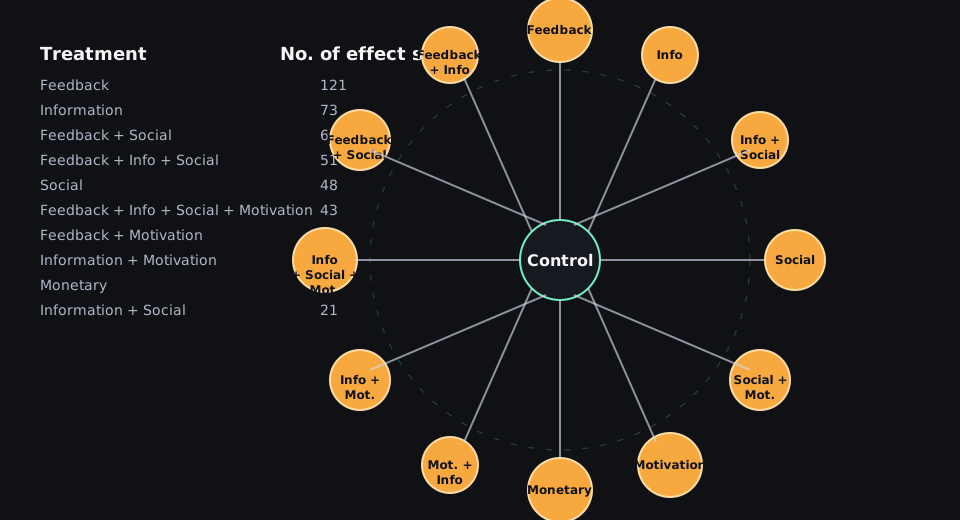
Provide policymakers with a single ranking of demand-side interventions by harmonizing 200+ experimental and quasi-experimental studies from 2010–2024.
Each arm in the network aggregates effect sizes for feedback, information, motivation, monetary incentives, and social comparison—plus every observed pairwise or triple combination.
Ran a random-effects NMA in R's netmeta with design-by-treatment
interactions to surface inconsistency, then replicated results via Bayesian HMC
in Stan for full posterior draws. Moderator terms handled geography, opt-in
status, and pricing structure.
Bundles that mix feedback + social pressure + monetary nudges cut consumption by 6–9%, roughly double the impact of single-channel information campaigns.